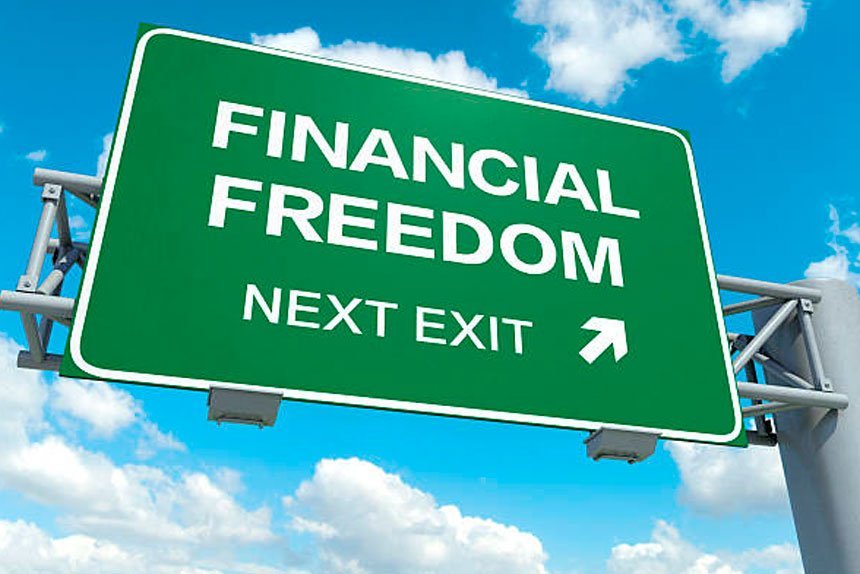
Introduction: Financial Freedom Is Not About Being Rich
When people hear the phrase financial freedom, many imagine luxury cars, private jets, or never checking prices again.
That image is attractive—but incomplete.
True financial freedom is not about excess.
It is about control.
Control over your time.
Control over your decisions.
Control over your future—without fear constantly sitting on your shoulder.
You don’t need to be a millionaire to be financially free. You need clarity, discipline, and a system that works quietly in the background while you live your life.
This article breaks down what financial freedom really means, why most people never reach it, and how you can realistically build it—step by step.
What Is Financial Freedom, Really?
Financial freedom means your money works harder than you do—or at least enough to give you choices.
At its core, financial freedom is the ability to:
- Cover your living expenses without stress
- Make decisions based on values, not desperation
- Walk away from bad situations
- Plan long-term without panic
It is not retirement.
It is not laziness.
It is leverage.
Why Financial Freedom Matters More Than Income
Many high-income earners live paycheck to paycheck.
Many modest earners live peacefully.
Income alone does not create freedom.
Structure does.
Financial freedom protects you from:
- Job loss
- Health issues
- Economic downturns
- Bad business cycles
Without freedom, even high income becomes a golden cage.
The Illusion of “Later”
Most people postpone freedom.
They say:
- “After my next promotion”
- “After my business grows”
- “After I make more money”
Later rarely comes.
Freedom is not a destination you arrive at—it is something you build gradually, starting now.
The CEO Mindset: Treat Your Personal Finances Like a Business
CEOs don’t run companies emotionally.
They run them strategically.
Apply the same mindset to your money.
Ask:
- Where is cash flowing in?
- Where is it leaking out?
- What assets are producing returns?
- What liabilities are draining energy?
Financial freedom starts when you stop reacting and start managing.
Step 1: Understand Your Financial Reality (No Filters)
Freedom starts with truth.
You need to know:
- Your monthly income
- Your fixed expenses
- Your variable spending
- Your debts
- Your assets
Avoiding numbers is expensive.
Clarity is empowering.
Step 2: Build a Margin Between Income and Expenses
Freedom requires margin.
If everything you earn is spent, you are trapped—even if income is high.
Margin gives you:
- Breathing room
- Options
- Investment capital
The goal is not deprivation.
The goal is intentional spending.
Step 3: Eliminate Toxic Debt
Not all debt is equal.
Toxic debt:
- High-interest
- Consumer-focused
- Emotion-driven
Credit card debt, payday loans, and lifestyle debt quietly destroy freedom by stealing future income.
Debt limits choice.
Freedom expands it.
Step 4: Create an Emergency Buffer
Financial freedom without emergency savings is fragile.
A proper buffer:
- Protects you from panic decisions
- Prevents new debt
- Buys time
This is not an investment—it’s insurance against chaos.
Step 5: Shift From Saving to Investing
Saving protects.
Investing multiplies.
Freedom requires growth beyond inflation.
This does not mean speculation.
It means consistent, long-term investing aligned with your risk tolerance.
Money sitting idle slowly loses power.
Step 6: Build Income Streams That Do Not Depend on Your Time
This is where real freedom begins.
Income sources can include:
- Investments
- Businesses
- Royalties
- Rental income
The goal is not “get rich quick.”
The goal is decouple income from hours worked.
Step 7: Protect What You Build
Financial freedom without protection is temporary.
Protection includes:
- Insurance
- Estate planning
- Risk management
One event can erase years of progress if protection is ignored.
Smart people insure against catastrophic loss.
Step 8: Redefine Lifestyle Inflation
As income rises, expenses often rise faster.
This keeps people trapped at higher levels.
Freedom is not about denying comfort—it’s about choosing upgrades that add value, not obligations.
Luxury that requires constant income is not freedom.
Simplicity with flexibility often is.
Step 9: Time Is the Real Asset
Money can be replaced.
Time cannot.
Financial freedom allows you to:
- Spend time intentionally
- Invest energy where it matters
- Say no without fear
Every financial decision should be evaluated by how it affects your future time.

Common Myths About Financial Freedom
Myth 1: You Need to Be Rich
False. You need control.
Myth 2: It Requires Extreme Sacrifice
False. It requires consistency.
Myth 3: It Happens Automatically
False. It requires design.
The Emotional Side of Freedom
Financial stress affects:
- Health
- Relationships
- Confidence
Freedom reduces background anxiety.
It creates space to think clearly and act deliberately.
That alone is priceless.
Why Most People Never Achieve Financial Freedom
Common reasons:
- Lack of planning
- Emotional spending
- Fear of investing
- Chasing shortcuts
- Avoiding responsibility
Freedom is boring at first.
Discipline always is.
The Power of Long-Term Thinking
Freedom rewards patience.
Small, consistent actions:
- Compound
- Multiply
- Accelerate
Time favors those who start early—even imperfectly.
Measuring Financial Freedom (Not Net Worth)
Ask yourself:
- Could I survive six months without income?
- Could I leave my job if necessary?
- Do I control my schedule?
Freedom is measured in options, not numbers.
Financial Freedom vs Retirement
Retirement is a date.
Freedom is a condition.
You can be financially free before retirement.
You can also retire without freedom.
Freedom is flexible.
Retirement is rigid.
The Role of Discipline
Motivation fades.
Discipline remains.
Freedom is built during:
- Ordinary months
- Boring routines
- Quiet decisions
There is no dramatic moment—just steady progress.
Building Freedom in Stages
- Stability
- Security
- Flexibility
- Independence
- Freedom
Each stage matters.
Skipping stages creates fragility.
Financial Freedom Is Personal
Your version may mean:
- More family time
- Less stress
- Geographic flexibility
- Creative freedom
There is no universal definition.
Define yours clearly—or you’ll chase someone else’s.
The Final Shift: From Fear to Choice
The ultimate benefit of financial freedom is choice.
Choice over:
- Work
- Lifestyle
- Relationships
- Time
When fear no longer controls decisions, life changes quietly—but permanently.
Final Thoughts: Financial Freedom Is Built, Not Found
Financial freedom is not luck.
It is not inheritance.
It is not secrecy.
It is:
- Intentional
- Structured
- Patient
You don’t need to know everything.
You just need to start.
Freedom does not arrive suddenly.
It grows—slowly, steadily—until one day you realize:
You are no longer trapped.
Word Count:
841
Summary:
A serious look at what I believe wealth management, investing and saving is all about. I�ll detail the choices that I made and the ones that I wish I made which hopefully will open your eyes to the choices that you have.
Keywords:
Consumption or investment, investment choices, share market investment, power compounding, accumulation, safe investing, young investor, investment spending, revenue producing
Article Body:
Financial freedom eludes so many people these days who by all logical conclusions and observations should have obtained it. It�s commonly cited as one of the most important and sought after goals in life and yet is rarely attained. This article does not attempt to give you a magic formula for success but I do share with you the choices that made a difference to me and can, if you choose put you well on the path to freedom.
Consumption
You can choose to spend some or all of your money on �consumption� items. These include food, entertainment, holidays, housing, motor cars, hobbies, and so on. These are things we need to live on a day-to-day basis. They also consist of items that service the things we want and so improve lifestyle.
Investment
You can choose to spend some or all of your money on investment items such as revenue producing real estate, shares, interest bearing deposits, businesses that produce revenue, etc.
Consumption or investment
Two important factors need to be understood about the simple concepts of consumption and investment.
The first factor is that spending on �consumption� items results in reducing the total value of your assets (net worth). Spending on investment items aims to increase your net worth. The second factor is that you have choice. You can choose between spending on consumption or investment items.
Of course, the best spending patterns are those that aim to attain a balance between spending on consumption and investment items.
Choosing consumption or investment
You now know the difference between consumption and investment spending and that you can choose between the two.
All you need to do is to think before you spend. Consumption spending can contribute to your lifestyle (driving a new car is fun, even if it was bought on credit and has created a liability of three to five years of payments). Investment spending provides income and wealth.
Shades of Grey
There is, of course, some spending that is not clearly defined as consumption or investment. Buying your own home is considered by many to be an investment. It isn�t! The purchase usually is financed and the repayments are a liability. The upkeep of a house costs money. There are rates and taxes payable on it. You do not get any revenue from it. If you plan to sell it in a few years to make a profit on its increased value, then it may be an investment. However if you have to buy another house to live in are you really any better off?
Investment spending is necessary for building wealth
In order to build wealth, some investment spending is necessary. The more that goes into investment spending, the bigger and quicker your wealth will grow. However, if too much goes into investment spending, and not enough into consumption, then lifestyle can become meagre. But you can choose.
Accumulation over time
Most people are not born rich. Certainly, some inherit wealth, but consequently may not appreciate it. A few win wealth in lotteries, but ironically, perhaps because they have not worked for it, or are not used to it, could end up squandering the temporary riches.
Everyone, however, has one thing in common. The same amount of time goes past for each of us, and at the same rate. How you employ that time is significant.
Imagine that at the age of 21, you invested $1,000 at an average annual rate of return of 10%, and then by the time you reach 65, you would have accumulated over $70,000 without doing anything else.
If at the age of 21, you invested $1,000 at an average annual rate of return of 10%, and each month invested an additional $100, then by the time you reach 65, you would be a millionaire, without doing anything else.
If you did neither of these things, then the same time would pass, and you would not have accumulated any wealth.
These examples of investment, quite deliberately, use amounts of money that are affordable by most, and if spent on investment, rather than consumption, would probably not be missed.
In terms of investing, time is on your side.
Of course, you may not be 21 any more and you may wish to accumulate wealth at a faster rate. This is possible by increasing the amount invested, and the annual rate of return. It is not possible to systematically accumulate significant wealth (millions) without looking at a timeframe of several years (say 5 to 10). If you are trying to make more money in less time, then your objectives may not be realistic. Perhaps a lottery ticket, crossed fingers and large amount of luck could produce your desired result, but don�t hold your breath waiting.
The power of compounding
In the above examples there is an additional factor at work. The entire return was reinvested and participated in earning the same rate of return as the original investment. None of the investment return was withdrawn and spent on consumption items.




Tinggalkan Balasan