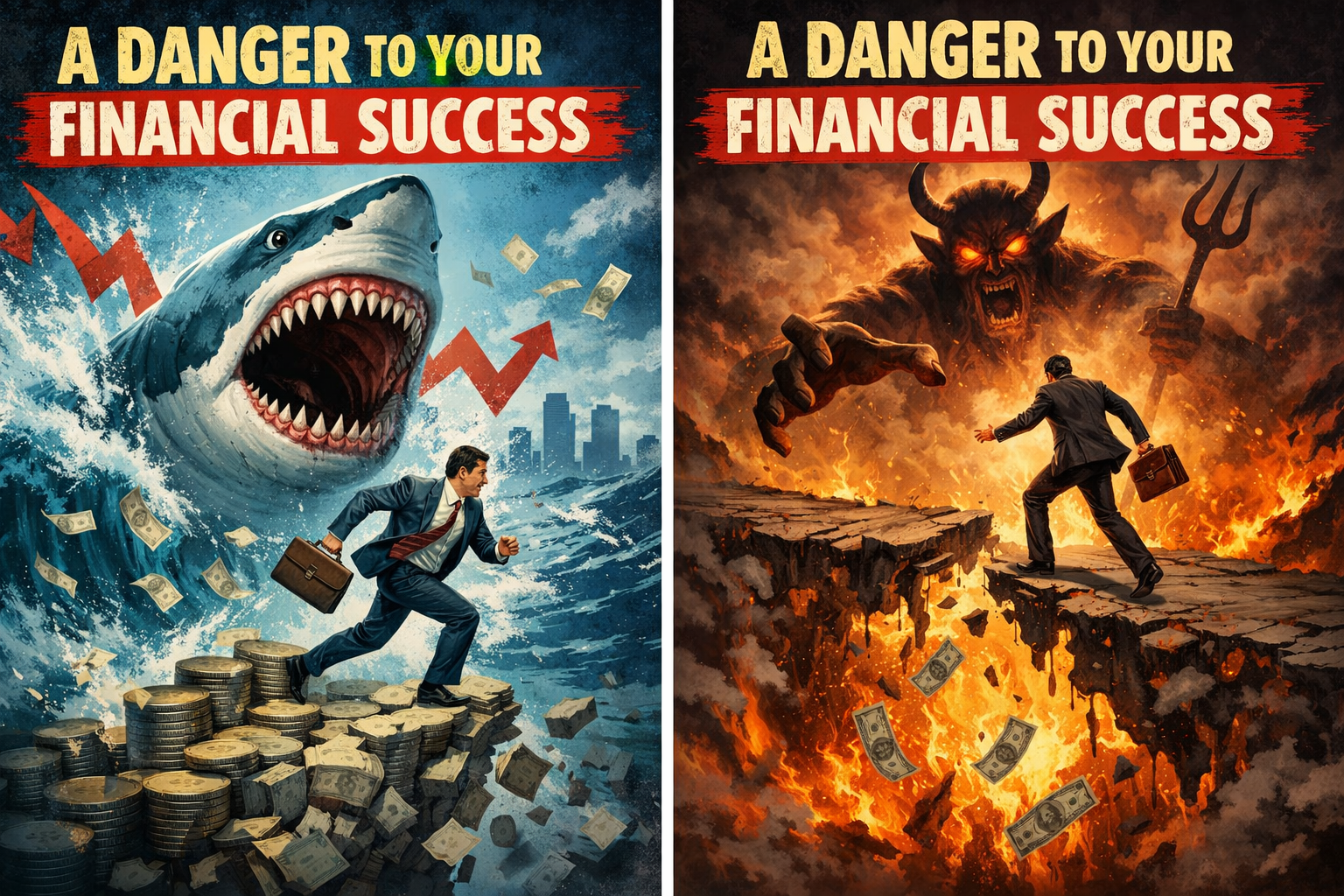
Introduction: The Temptation of Perfect Timing
Every investor has felt it.
You see the market rising and think, “I should have bought earlier.”
You see the market falling and think, “I’ll wait until it hits the bottom.”
This instinct is called market timing, and it feels logical. Why invest now if prices might fall tomorrow? Why hold investments when a crash seems inevitable?
Yet, despite how convincing it sounds, market timing is one of the most dangerous habits an investor can develop. It has destroyed more wealth than bad stock picks, economic recessions, or even market crashes.
In this article, we’ll break down why market timing fails, how it quietly sabotages long-term financial success, and what smarter investors do instead. Whether you’re investing in stocks, real estate, or other assets, understanding this concept could save you years of lost returns.
1. What Is Market Timing?
Market timing is the strategy of trying to predict future market movements in order to buy at the lowest point and sell at the highest point.
In theory, it sounds perfect:
- Buy before prices go up
- Sell before prices fall
- Avoid losses entirely
In reality, it requires two perfect decisions:
- Knowing when to exit the market
- Knowing exactly when to re-enter
Missing either one can severely damage returns.
2. Why Market Timing Feels So Logical
Market timing appeals to human psychology.
We Hate Losses More Than We Love Gains
Behavioral finance shows that people feel the pain of loss about twice as strongly as the pleasure of gain. Market timing feels like a way to avoid pain.
News and Social Media Amplify Fear
Headlines thrive on drama:
- “Market Crash Coming”
- “Recession Inevitable”
- “This Bubble Will Burst”
The more we consume financial news, the more urgent it feels to do something.
3. The Biggest Problem: Markets Are Unpredictable
The core issue with market timing is simple:
Markets do not move in predictable patterns.
Even professional investors with:
- Advanced models
- Insider access
- Decades of experience
struggle to consistently time the market.
Major market gains often occur:
- Unexpectedly
- During periods of high uncertainty
- Shortly after major declines
By the time “certainty” appears, prices have already moved.
4. The Cost of Missing the Best Days
One of the most devastating facts in investing is this:
Missing just a few of the market’s best days can ruin long-term returns.
Historically:
- The best days often follow the worst days
- Investors who panic and exit miss the rebound
Trying to jump in and out often results in:
- Selling low
- Buying back higher
The exact opposite of what investors intend.
5. Market Timing vs Long-Term Investing
Market Timers Focus On:
- Short-term price movements
- Predictions
- Emotional reactions
- Constant adjustments
Long-Term Investors Focus On:
- Business fundamentals
- Time in the market
- Compounding
- Consistency
One strategy depends on being right often.
The other depends on patience and discipline.
6. Why Even Experts Fail at Market Timing
If market timing worked, hedge funds and active managers would consistently outperform.
But the data shows:
- Most active managers underperform over time
- Very few beat the market consistently
- Past success rarely predicts future performance
If professionals can’t reliably time the market, expecting individual investors to do so is unrealistic.
7. Emotional Investing: The Silent Wealth Killer
Market timing is rarely a rational strategy. It’s emotional.
Common emotional triggers:
- Fear during downturns
- Greed during rallies
- Regret after missed opportunities
Emotions push investors to act at the worst possible moments.
Successful investing requires the ability to do nothing when emotions scream to act.
8. The Illusion of “Waiting for a Better Entry”
Many investors stay in cash waiting for the “perfect moment.”
But this approach has hidden risks:
- Inflation erodes purchasing power
- Markets may rise while you wait
- Re-entry becomes psychologically harder
Waiting often turns into paralysis.
9. Market Timing and Opportunity Cost
While you wait:
- Compounding stops
- Dividends are missed
- Growth opportunities disappear
Time, not timing, is the real engine of wealth creation.
10. Dollar-Cost Averaging: A Smarter Alternative
Instead of timing the market, many investors use dollar-cost averaging (DCA).
This means:
- Investing a fixed amount regularly
- Regardless of market conditions
Benefits:
- Reduces emotional decisions
- Smooths entry prices
- Encourages consistency
DCA doesn’t try to predict the market—it works with uncertainty.
11. How Market Timing Hurts Retirement Planning
For long-term goals like retirement:
- Timing mistakes compound over decades
- Missed growth is difficult to recover
Investors who exit markets during downturns often:
- Lock in losses
- Delay retirement
- Take more risk later to catch up
12. Real Estate and Market Timing: Same Trap, Different Asset
Market timing isn’t limited to stocks.
In real estate:
- Investors wait for “price crashes”
- Miss years of rental income
- Compete aggressively when prices rebound
Successful real estate investors focus on:
- Cash flow
- Long-term demand
- Financing strategy
Not short-term price predictions.

13. The Myth of “This Time Is Different”
Every market cycle feels unique:
- New technology
- New economic threats
- New political uncertainty
Yet markets have survived:
- Wars
- Recessions
- Pandemics
- Financial crises
Believing “this time is different” often leads to costly mistakes.
14. What Successful Investors Do Instead
Instead of market timing, successful investors:
- Build diversified portfolios
- Rebalance periodically
- Invest consistently
- Stay focused on long-term goals
They accept volatility as the price of returns.
15. Risk Management Beats Market Timing
Risk can’t be eliminated, but it can be managed.
Smarter approaches include:
- Asset allocation
- Emergency funds
- Appropriate position sizing
- Long-term perspective
Managing risk is controllable. Market timing is not.
16. The Power of Compounding Over Time
Compounding rewards:
- Early starters
- Consistent investors
- Patient thinkers
Even modest returns grow significantly given enough time.
Market timing interrupts compounding—and that cost is enormous.
17. Common Market Timing Traps to Avoid
- Selling after panic-driven news
- Waiting for “confirmation”
- Chasing recent winners
- Trying to predict bottoms
Awareness is the first defense.
18. When Some Timing Can Make Sense
Not all timing is bad.
Strategic timing includes:
- Tax-loss harvesting
- Rebalancing allocations
- Adjusting risk as goals change
These are rule-based, not emotional decisions.
19. Building an Investor Mindset
Long-term success requires:
- Discipline over intelligence
- Patience over prediction
- Process over emotion
The market rewards behavior more than brilliance.
20. Final Thoughts: Time Is Your Greatest Asset
Market timing promises control—but delivers stress, regret, and missed opportunity.
The truth is simple:
- You don’t need perfect timing
- You need consistency
- You need time
Financial success isn’t about avoiding every downturn. It’s about staying invested long enough for growth to do its work.
Conclusion: Don’t Let Market Timing Steal Your Future
Market timing feels smart. It feels safe.
But over time, it quietly erodes wealth.
If you want real financial success:
- Invest with intention
- Ignore the noise
- Let time work for you, not against you
Because in investing, time in the market beats timing the market—every single time.
Word Count:
635
Summary:
Market timing are the two most dangerous words in investing – especially when practiced by novice traders.
Market timing is the strategy of attempting to predict future price movements through use of various fundamental and technical analysis tools – and when used to predict trending moves, ends in disaster, and losses.
Keywords:
market timing
Article Body:
Market timing are the two most dangerous words in investing – especially when practiced by novice traders.
Market timing is the strategy of attempting to predict future price movements through use of various fundamental and technical analysis tools – and when used to predict trending moves, ends in disaster, and losses.
Many investors feel that market timing is the same as trend following and the two go hand in hand, they don�t.
Trend Following and Market Timing
Trend Followers REACT to market movement and act on these moves when they occur.
Traders who believe in Market Timing think they can PREDICT turning points in advance and buy at a low or sell at a high.
This is impossible to do; no one can predict the market.
Market timing advocates �buy low and sell high� but this is not the way to make money from trend following.
The Real aim of Trend Following
To increase your chances of success in trend following you need to wait for confirmation of a move and for a trend to develop.
You are going to miss the start of the trend and not buy the bottom or sell the top, but this is hindsight.
By waiting for the confirmation for the trend to develop, the probability of the trend continuing and you getting a proportion of the profits are vastly increased.
The real way to make money don�t predict wait for confirmation!
The real way to make money is by �buying high and selling higher� and �selling low and buying lower� You will have far less losses this way and still make healthy profits than if you try to predict with market timing techniques.
Market timing is doomed to failure – as the market never does exactly what we expect, and no scientific law governs the market (despite what the followers of predictive theories such as Gann and Elliott wave might tell you).
We are only dealing with probabilities – not certainties.
Trading is an odds game and your entry and exit levels from the market need to reflect this.
This means trading only when the trend is underway and likely to continue.
Dealing with Volatility
When dealing with market timing many traders are attracted to it as they feel it controls risk.
One of the major problems for traders is when they enter a trend in motion and they get stopped out.
The most effective way of entering a trend is a breakout method, but very often the trade dips back stops out the trader and then goes back they way they thought, but there is a solution:
Enter the Trade with Options
Options give you staying power to ride out short-term pullbacks against you, but you need to know how to use them correctly and this means:
- Buying in the money or close to the money options 2. Make sure you have plenty of time value on your side
This will increase your chances of success dramatically; give you staying power, limited risk and unlimited gains!
The best Method, Market and Vehicle for Trading
The best method to get in on a trend is a breakout method (read our other articles for more information on why) the best vehicle to control and manage risk on entry is options.
Finally, the best markets with the best trends to lock into for profit are:
The global FOREX markets, all the major currencies offer great long-term trends, many of which last for years.
These trends last so long that you can forget trying to predict with market timing and just take a proportion of the trend, which will still give you big profits over the longer term.
As you can see market timing is misunderstood and has nothing to do with making money from trend following and actually creates risk, rather than reducing it.



Tinggalkan Balasan